

What is the Apache License?
The Apache License is a widely-used open-source software license developed and maintained by the Apache Software Foundation (ASF). It provides a legal framework for users and developers to use, modify, distribute, and contribute to open-source software projects, while also offering important protections and freedoms.
Overview of the Apache License
The current version of the Apache License is Version 2.0, released in January 2004. It is designed to be a flexible and business-friendly license that allows both open-source and proprietary use of the software.
Some popular software projects that use the Apache License include:
Apache HTTP Server
Apache Hadoop
Apache Cassandra
Elasticsearch
Kubernetes
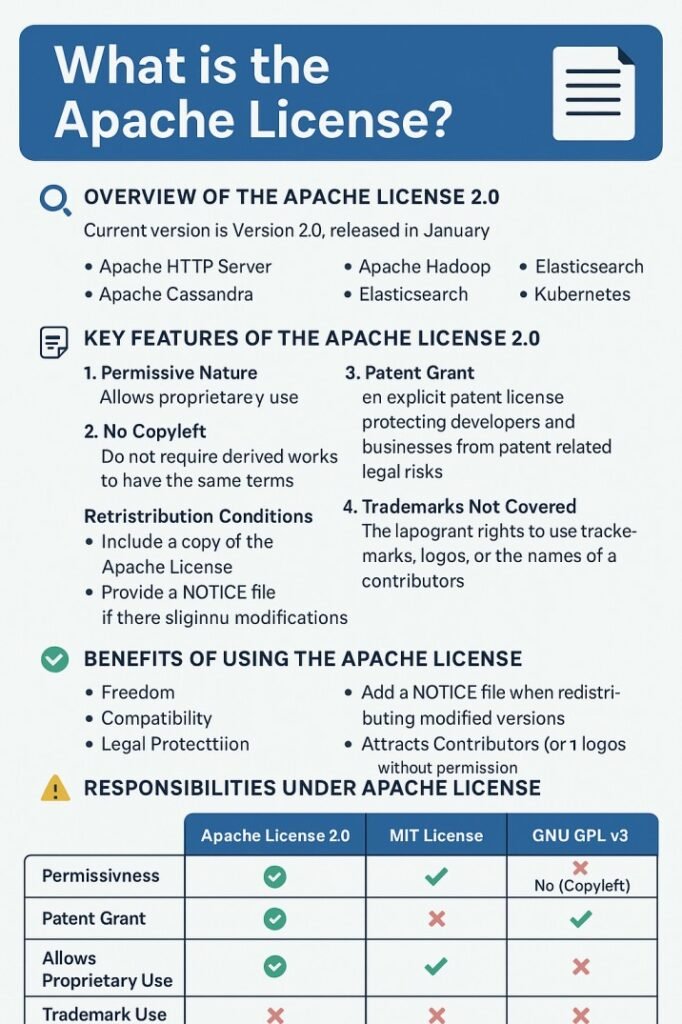
Key Features of the Apache License 2.0
1. Permissive Nature
The Apache License is a permissive license, which means it allows users to freely use the software for any purpose—including commercial use—without requiring the resulting software to be open source.
2. No Copyleft
Unlike the GNU GPL, the Apache License does not require derived works to be licensed under the same terms. This makes it suitable for businesses that want to integrate open-source software into proprietary systems.
3. Redistribution Conditions
You can modify the software and redistribute it, but you must:
Include a copy of the Apache License.
Provide a NOTICE file if there are significant modifications or contributions.
State any changes made to the original source.
4. Patent Grant
One of the most significant aspects of Apache License 2.0 is the explicit patent license it provides. Contributors grant users a royalty-free license to any patents they may hold that are necessary to use the software.
This helps protect developers and businesses from patent-related legal risks.
5. Trademarks Not Covered
The Apache License does not grant rights to use trademarks, logos, or the names of the contributors. For example, using the word “Apache” in a commercial product name requires separate permission.
Benefits of Using the Apache License
Freedom: Use, modify, and distribute the software freely.
Compatibility: Apache License is compatible with many other open-source licenses.
Legal Protection: Protects users from patent litigation by contributors.
Attracts Contributors: Its permissiveness encourages a wide range of contributors, including companies.
Responsibilities Under Apache License
Even though the Apache License is permissive, users must:
Include the license text with the software.
Add a NOTICE file when redistributing modified versions.
Not use the original trademarks or logos without permission.
Apache License vs Other Licenses
| Feature | Apache License 2.0 | MIT License | GNU GPL v3 |
|---|---|---|---|
| Permissive | ✅ Yes | ✅ Yes | ❌ No (Copyleft) |
| Patent Grant | ✅ Yes | ❌ No | ✅ Yes |
| Allows Proprietary Use | ✅ Yes | ✅ Yes | ❌ No |
| Trademark Use | ❌ No | ❌ No | ❌ No |
Conclusion
The Apache License 2.0 is a powerful and flexible license that balances the openness of free software with the legal protections required for widespread adoption. Whether you’re a developer looking to contribute to an open-source project or a business considering using open-source tools, understanding the Apache License is essential for making informed decisions.
It’s trusted by many of the world’s largest software projects for a reason—it combines freedom with legal safety.