

What is the GNU GPL License?
In the world of open-source software, the GNU General Public License (GNU GPL or simply GPL) is one of the most widely used and influential software licenses. If you’ve ever used software like Linux, WordPress, or VLC Media Player, you’ve already interacted with the power of the GPL.
In this article, we’ll explain what the GNU GPL license is, how it works, its different versions, and why it matters to developers, businesses, and users.
What is the GNU GPL License?
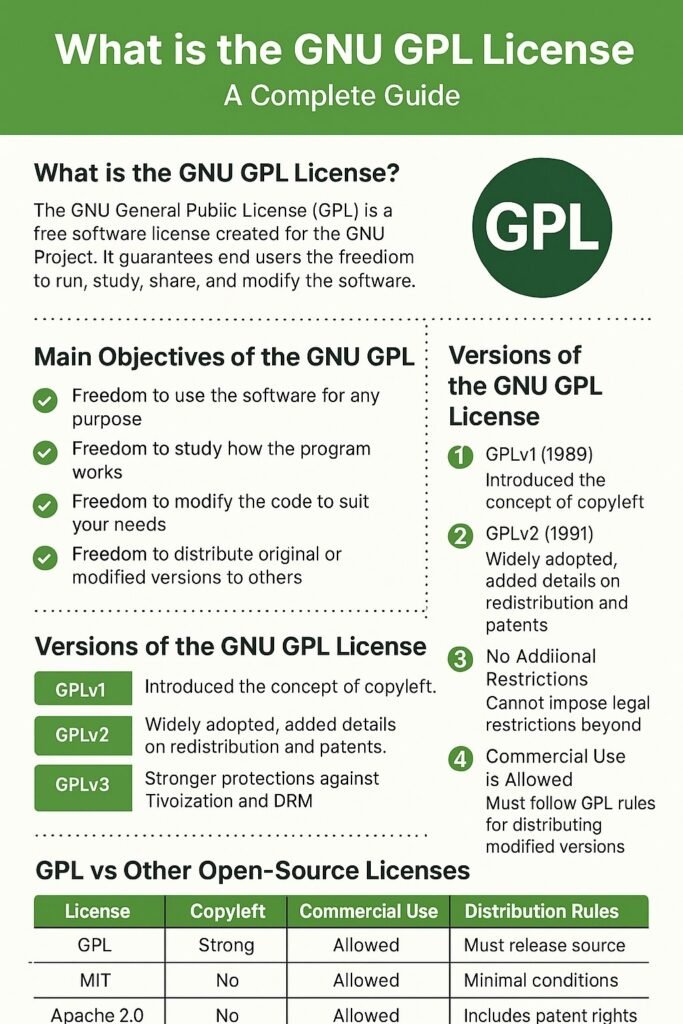
The GNU General Public License (GPL) is a free software license originally written by Richard Stallman of the Free Software Foundation (FSF) for the GNU Project. It guarantees end users the freedom to run, study, share, and modify the software.
In simple terms, the GPL allows anyone to use the software for any purpose, but if they distribute it (modified or unmodified), they must do so under the same GPL license — keeping the source code open and accessible.
Main Objectives of the GNU GPL
The core goals of the GNU GPL are:
Freedom to use the software for any purpose
Freedom to study how the program works
Freedom to modify the code to suit your needs
Freedom to distribute original or modified versions to others
It promotes software freedom and encourages a community-driven development model.
Key Terms of the GNU GPL License
Copyleft: The GPL is a copyleft license, which means any derivative work must also be licensed under the GPL. You can modify GPL-licensed code, but you must share your modifications with the community under the same license.
Source Code Availability: If you distribute the software (or a modified version), you must make the source code available to users.
No Additional Restrictions: You cannot impose further legal restrictions beyond what the GPL allows.
Commercial Use is Allowed: GPL software can be used commercially, but distribution of modified versions must follow GPL rules.
Versions of the GNU GPL License
There are three major versions of the GPL:
🧾 GPLv1 (1989)
The original version introduced the concept of copyleft.
🧾 GPLv2 (1991)
Widely adopted by many major open-source projects (e.g., Linux kernel).
Includes more detailed terms for redistribution and patent rights.
🧾 GPLv3 (2007)
Added stronger protections against Tivoization (hardware restrictions on modified code).
Improved compatibility with other licenses.
Better handling of patent treachery and digital rights management (DRM) issues.
Projects can choose to use a specific version (e.g., “GPLv2 only”) or allow any later version (“GPLv2 or later”).
GPL vs Other Open Source Licenses
| License | Copyleft | Commercial Use | Distribution Rules |
|---|---|---|---|
| GPL | Strong | Allowed | Must release source under GPL |
| MIT | No | Allowed | Minimal conditions |
| Apache 2.0 | No | Allowed | Includes patent rights |
| BSD | No | Allowed | Very permissive |
Why Developers Use the GPL
They want to protect their code from being closed-source in derivative products.
They believe in collaboration and openness.
GPL ensures improvements stay public, encouraging innovation.
However, some developers prefer permissive licenses like MIT when they want fewer restrictions on how others use their code.
What Does the GPL Mean for Businesses?
If your business uses GPL software internally, you’re generally not required to share your changes.
But if you distribute GPL software (especially modified versions), you must provide the source code under the GPL license. This can raise concerns for proprietary software vendors, so companies must understand GPL compliance properly.
Conclusion
The GNU GPL License is a cornerstone of the open-source ecosystem. It empowers users with freedom while ensuring developers benefit from community contributions. Whether you’re a developer, a startup, or an enterprise, understanding how the GPL works is crucial when working with open-source tools.
If you’re planning to use or distribute GPL-licensed software, make sure to read the full license text and understand your responsibilities.